What Is a Black Box in Aircraft? The Complete 2026 Guide
It's bright orange. It's not a box. And it may be the most important piece of equipment on any commercial aircraft — not because it saves lives in a crash, but because of everything it reveals afterward. Here's the truth about the device that speaks for the dead.
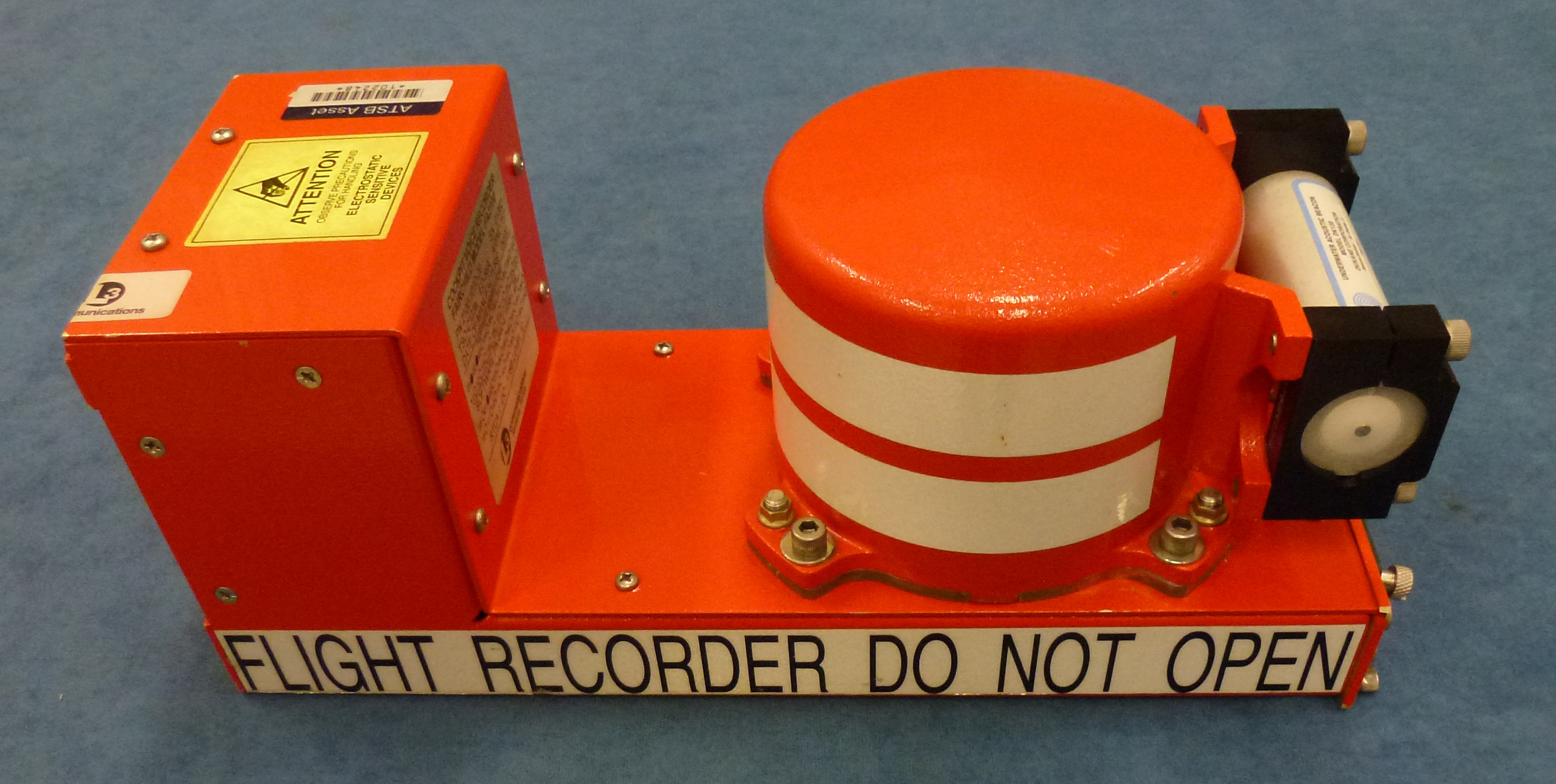
A recovered Cockpit Voice Recorder (CVR). The orange casing is standard across all modern flight recorders for visibility during crash site searches. | Image: ATSB (Australian Transport Safety Bureau)
- The Call That Starts Every Investigation
- What Is a Black Box — The Real Answer
- FDR vs. CVR: Two Recorders, Two Stories
- The Engineering Behind Survival
- What the FDR Actually Records
- What the CVR Actually Records
- Real Accidents, Real Revelations
- What MH370 Exposed About the Whole System
- Safety Improvements That Came Directly From Black Box Data
- The Future: Beyond the Black Box
- FAQ
On June 1, 2009, Air France Flight 447 disappeared over the South Atlantic at 2:14 a.m. local time. An Airbus A330 with 228 people on board, en route from Rio de Janeiro to Paris, simply vanished from radar screens. No distress call. No wreckage found for five days. No explanation.
The investigation that followed became one of the most important — and most technically demanding — in aviation history. Over two years passed before the black boxes were found, 3,900 metres below the ocean surface. When they finally were, they answered every question. The FDR recorded the exact moment the pitot tubes iced over. The CVR captured the precise words the crew spoke as the aircraft stalled and fell. Every control input. Every alarm. Every last second.
228 people died. But the black boxes — the two orange devices that survived 25 months at the bottom of the Atlantic — produced findings that have since changed how every Airbus A330 pilot in the world is trained to handle a stall recovery.
That is what a black box does. It doesn't save the people on board. It saves the people on the next flight — and the one after that.
When I first learned about black boxes in ground school, the technical specifications felt abstract — 3,400 G-forces, 1,100°C fire resistance. Then my instructor put it differently: that box has to survive whatever killed everyone else on the aircraft, and still tell us what happened. That reframing changed everything. The black box isn't just a recording device. It's the only witness that cannot lie, cannot forget, and cannot be pressured into silence. For someone training to fly, understanding what it records — and why — is part of understanding what it means to be a safe pilot.
What Is a Black Box in Aircraft — The Real Answer
The term "black box" is misleading in almost every way. The devices are bright orange, not black. They are cylindrical or roughly rectangular — not box-shaped in any conventional sense. And there are two of them, not one.
A "black box" is the informal collective name for two separate crash-protected recording devices that are mandatory on all commercial aircraft worldwide under ICAO Annex 6 standards: the Flight Data Recorder (FDR) and the Cockpit Voice Recorder (CVR).
They serve different purposes, record different information, and together provide investigators with a near-complete picture of what an aircraft was doing and what its crew was saying in the period leading up to any accident or incident.
The name originates from early aviation's informal engineering term "black box" — used generically for any self-contained electronic unit whose internal workings weren't visible to the operator. Early FDRs were sometimes housed in dark casings. The name stuck, regardless of colour.
In India, the DGCA follows ICAO Annex 6 requirements directly, mandating FDRs and CVRs on all aircraft above 5,700 kg maximum certified takeoff weight. In the USA, the FAA enforces equivalent requirements under 14 CFR Part 91. In Europe, EASA standards mirror ICAO. These requirements are effectively global — any commercial aircraft you board, anywhere in the world, carries both devices.
FDR vs. CVR: Two Recorders, Two Different Stories
Understanding what each device records — and what it doesn't — is essential to understanding how accident investigations actually work.
"The FDR tells you what the plane did. The CVR tells you what the pilots were thinking and saying while it was happening. Together, they reconstruct a crash with a precision that no other investigation tool can match."
The Engineering Behind Survival: How a Black Box Outlives a Crash
A commercial aircraft crash involves forces, temperatures, and pressures that destroy almost everything. Seat structures, airframe sections, engines — all are obliterated in high-energy impacts. Yet the black box must survive, intact, with recoverable data. This is not accidental. It is the result of engineering standards that have been developed and refined over six decades.
The Crash Survivability Test Standards
Every black box must pass a rigorous series of standardised tests before being certified for aircraft use. EUROCAE ED-112A and FAA TSO-C124c are the current technical standards, covering:
- Impact shock: 3,400 G-force for 6.5 milliseconds — equivalent to hitting a concrete wall at several hundred kilometres per hour
- Penetration resistance: A 500 lb (227 kg) steel pin dropped from 10 feet (3 m) directly onto the unit — must not penetrate the memory module
- Fire resistance: 1,100°C for 60 minutes sustained — roughly the temperature of burning jet fuel
- Deep sea pressure: Equivalent of 20,000 feet (6,000 m) water depth for 24 hours — more than the depth of most ocean floors
- Salt water corrosion: Full immersion in salt water for 30 days without data degradation
- Static crush: 5,000 lb (2,267 kg) applied for 5 minutes from any direction
- Low temperature: Operation after exposure to −55°C for 24 hours — relevant for wreckage in polar regions
The memory module itself — the component that actually stores the data — is encased in multiple layers: an outer stainless steel shell, an intermediate layer of thermal insulation material, an inner aluminium housing, and the solid-state memory board at the centre. Even if the outer casing is destroyed, the memory module is engineered to survive separately.
The Underwater Locator Beacon
Attached to the outside of each recorder is an Underwater Locator Beacon (ULB) — a small device that activates automatically on water contact and begins emitting a 37.5 kHz acoustic pulse once per second. Search vessels and submarines equipped with hydrophone arrays can detect this signal at distances of up to 2–3 kilometres under ideal conditions.
Following the MH370 disappearance, ICAO mandated a new minimum beacon duration of 90 days for aircraft ordered from January 2020 onward. Discussions are ongoing about extending this to 180 days for ultra-long-haul operations over remote ocean areas.
What the Flight Data Recorder Actually Captures
Modern FDRs on large commercial aircraft record over 1,000 individual flight parameters. This is not a rough approximation — it is a precise, time-stamped record of virtually every measurable aspect of the aircraft's operation, updated multiple times per second.
The mandatory minimum parameters specified by ICAO Annex 6 include: time, pressure altitude, airspeed, heading, normal acceleration, pitch attitude, roll attitude, radio transmission keying, thrust/power on each engine, control surface positions, flap settings, landing gear position, and ground proximity warning events.
Beyond the mandatory minimum, modern aircraft systems feed hundreds of additional parameters into the FDR: individual hydraulic system pressures, fuel flow per engine, autopilot engagement status, brake application force, tire pressure, cabin pressure differential, individual warning system activations, and data bus traffic from flight management computers.
In practice, this means that after a crash, investigators can reconstruct a complete four-dimensional picture of the aircraft's flight path, attitude, energy state, and system configuration at any moment during the final hours of flight — accurate to fractions of a second.
In our aircraft performance and systems classes, we study parameters like angle of attack, load factor, and energy management as abstract concepts. The FDR records all of these continuously. This means that every decision I make as a pilot is theoretically quantifiable and reviewable — not just in a crash, but in routine operations. Many airlines use FDR data proactively through Flight Operational Quality Assurance (FOQA) programs to identify patterns of energy mismanagement, hard landings, or unstabilised approaches before they become incidents. The FDR isn't just a post-accident tool. For safety-conscious airlines, it's a continuous feedback system.
What the Cockpit Voice Recorder Actually Captures
The CVR records four separate audio channels simultaneously: the Captain's headset microphone, the First Officer's headset microphone, the observer/jump seat microphone if occupied, and the Area Microphone — a sensitive omnidirectional microphone mounted in the cockpit ceiling that captures all ambient sounds.
That last channel is often the most revealing. The area microphone captures everything the headset channels miss: the sound of switches being toggled, the specific tone and urgency of warning alarms, the sound of the stall warning horn, the physical sound of turbulence, and sometimes — in catastrophic structural failures — the sounds of the aircraft itself breaking apart.
The CVR is legally protected in most jurisdictions. Under ICAO Annex 13 and corresponding national regulations, CVR transcripts are not admissible as evidence in civil litigation in many countries — a protection designed to ensure pilots speak honestly in the cockpit without fear that their words will be used against them or their estates. This protection has been contentious but serves an important safety purpose: it keeps cockpit communication open and honest.
Some of the most significant findings in aviation human factors research have come not from the flight data, but from CVR transcripts. Researchers studying Crew Resource Management identified that in a large percentage of fatal accidents, the CVR captured moments where one crew member recognised a developing problem but failed to communicate it assertively to the other. The phrase "crew coordination failure" now appears in dozens of NTSB and BEA accident reports. The CVR didn't just record the last moments of those flights. It told us why, across aviation, pilots were dying from poor communication — and triggered a global rewriting of cockpit culture training.
How flight recorder data shaped the initial investigation of the Baramati accident — and what it revealed about the final moments of the flight.
Real Accidents, Real Revelations: Case Studies
Air France Flight 447: The Two-Year Wait That Changed Everything
AF447 disappeared on June 1, 2009 — an Airbus A330 operating from Rio de Janeiro to Paris. All 228 occupants died. The aircraft wreckage was located within five days, but the black boxes lay at 3,900 metres depth in the equatorial Atlantic for nearly two years before specialist deep-ocean vehicles recovered them in May 2011.
What they revealed was devastating in its clarity. The pitot tubes — airspeed sensors — iced over at altitude, giving conflicting and unreliable airspeed readings. The autopilot disconnected. The crew, confronted with confusing instrument data in the middle of the night over the ocean, misidentified the aircraft's flight condition. The First Officer pulled back on the sidestick when the aircraft needed to pitch down. The aircraft entered a full aerodynamic stall from which it never recovered. The entire sequence lasted 3 minutes and 30 seconds.
The BEA (France's accident investigation authority) report ran to hundreds of pages. The recommendations triggered mandatory changes to pitot tube specifications on Airbus A330/A340 fleets globally, mandatory upset recovery training (UPRT) for all commercial pilots, and a wholesale review of how airlines train crews to handle degraded automation scenarios.
Asiana Airlines Flight 214: When the FDR Revealed the Automation Trap
On July 6, 2013, an Asiana Airlines Boeing 777 crashed short of Runway 28L at San Francisco International Airport (SFO), killing 3 passengers. The approach was conducted in clear visual conditions — no weather factor, no technical failure, no emergency.
The FDR data told the real story. The flight crew had set an autothrottle mode that did not automatically maintain airspeed on a visual approach in the way the Captain expected. The aircraft descended below the correct glidepath. Airspeed decayed. The stall warning activated 4 seconds before impact. The crew attempted a go-around but it was too late.
The NTSB's investigation identified something the industry had been reluctant to name directly: automation dependency. Highly automated modern aircraft had produced a generation of pilots whose manual flying skills had atrophied — and who sometimes misunderstood the logic of the automation they relied on. The NTSB's recommendations included requirements for airlines to ensure pilots maintain manual flying proficiency throughout their careers.
Air India Express Flight 812: The CVR That Revealed a Sleeping Commander
On May 22, 2010, Air India Express Flight 812 overran the tabletop runway at Calicut (Kozhikode) Airport, killing 158 people. The Boeing 737-800 touched down far beyond the threshold with excess speed and insufficient brake application, fell off the end of the runway, and plunged into a gorge.
The CVR and FDR data revealed that the Commander had been asleep for a significant portion of the flight and was heard snoring on the cockpit area microphone. He had taken control only in the final approach phase, fatigue-impaired, and conducted a non-stabilised approach. The aircraft was significantly above the correct glidepath at a point where a go-around was clearly the correct decision.
The AAIB India investigation led to major changes in DGCA fatigue management regulations, flight time limitations, and mandatory go-around training requirements for Indian carriers.
How black box data shaped the investigation timeline and what the findings revealed about approach procedures.
What MH370 Exposed: The Dangerous Gap Nobody Wanted to Discuss
The disappearance of Malaysia Airlines Flight MH370 on March 8, 2014 — a Boeing 777 carrying 239 people — exposed a vulnerability in the global flight recording system that the aviation industry had known about for years but had not adequately addressed: you cannot use a black box you cannot find.
Despite the largest and most expensive aviation search in history — spanning over 120,000 square kilometres of the southern Indian Ocean — the black boxes were never recovered. The ULB batteries have long since expired. The boxes may never be found.
MH370 forced an industry-wide confrontation with three failures simultaneously:
First, the 30-day beacon limitation. The Indian Ocean search area was too vast, and the signal too weak, to locate the recorders before the beacons expired. ICAO responded by mandating 90-day beacons on new aircraft from 2020, but the root problem — that we depend on physical recovery of a device from potentially 6,000-metre depths — remains.
Second, aircraft tracking gaps. MH370 flew for approximately seven hours after its transponder was switched off, and conventional ATC radar coverage did not extend to the remote ocean area it traversed. This was already known to be a global gap — the accident made it politically impossible to ignore. ICAO's GADSS (Global Aeronautical Distress and Safety System) now mandates minute-by-minute position reporting for all commercial aircraft in all airspace worldwide.
Third, data streaming latency. The aircraft's ACARS system was transmitting limited health data to the ground throughout the flight — but only at irregular intervals, and not the rich flight data that the FDR records. If continuous FDR data had been streaming to a ground server, the investigation would have had answers regardless of whether the physical recorders were ever found.
In direct response to MH370, ICAO adopted a global aircraft tracking standard requiring commercial aircraft to report their position at least every minute when in distress, and every 15 minutes during normal operations in remote areas. Airlines have implemented satellite-based ADS-B and ACARS upgrades to meet these requirements. More significantly, MH370 accelerated industry discussion of "Automatic Deployable Flight Recorders" (ADFRs) — recorders that eject automatically from the aircraft at altitude and deploy a parachute and beacon, bringing them to the ocean surface before they sink to unreachable depths. EASA mandated ADFRs on new large commercial aircraft from 2023.
A data-driven look at Indian aviation safety trends, how AAIB investigations use flight recorder data, and what the accident record reveals about Indian aviation's safety trajectory.
Safety Improvements That Came Directly From Black Box Data
The black box's greatest contribution to aviation is not the information it provides after accidents — it is the systemic changes that information triggers. Every major safety improvement in commercial aviation over the past five decades carries a black box ancestry.
- Crew Resource Management (CRM) training. CVR analysis from accidents in the 1970s and 80s revealed that cockpit communication failures — not technical faults — were the leading cause of fatal accidents. United Airlines Flight 173 (1978) was the paradigm case: a crew so focused on a landing gear light that they let the aircraft run out of fuel. The CVR captured all of it. CRM became mandatory globally because of what the CVR told us.
- Ground Proximity Warning System (GPWS) / TAWS. Controlled Flight Into Terrain (CFIT) — flying a serviceable aircraft into the ground — was killing more people than any other accident type in the 1960s and 70s. CVR recordings from CFIT accidents showed that crews had no terrain warning. GPWS was mandated in 1978 after black box data from successive CFIT accidents made the need undeniable.
- Traffic Collision Avoidance System (TCAS). Mid-air collision data — including the Überlingen disaster (2002) over Germany — showed that ATC instruction and crew response timing created collision risk windows. FDR data from near-misses and collisions directly informed TCAS algorithm design and the TCAS Resolution Advisory compliance rules that now apply globally.
- Pitot tube redesign on Airbus aircraft. Air France 447's FDR data pinpointed the exact sensor failure mode. Airbus A330 and A340 operators worldwide replaced their pitot tubes within months of the BEA interim report.
- Upset Prevention and Recovery Training (UPRT). Loss of Control accident FDR data — AF447, Colgan Air 3407, others — demonstrated that pilots were routinely applying incorrect inputs during unusual attitudes. UPRT became a global ICAO requirement as a direct result of what the FDR data showed.
- Real-time aircraft tracking (GADSS). MH370's absence of a found black box, and the tracking gaps it exposed, produced ICAO's GADSS standard. Every commercial aircraft now reports position every minute in distress scenarios.
Every procedure in my DGCA syllabus — every checklist, every emergency drill, every CRM concept — has an accident report somewhere in its history. The black box is the mechanism that makes aviation self-correcting over time. When you follow a checklist, you are following the collected lessons of every crew whose CVR and FDR recorded what happened when the checklist wasn't followed. That's not a philosophical point. It's a literal description of how aviation safety has been built, layer by layer, over 60 years of flight recorder data.
The Future: Beyond the Black Box
The aviation industry is in the early stages of a fundamental shift: moving from physical recovery of flight recorder data to continuous, real-time streaming of that data to the cloud. The concept is already operational in partial form; the question is when it becomes the global standard.
Airlines including Qantas, Air France, and several Gulf carriers have implemented voluntary ACARS-based real-time data streaming programs that transmit selected FDR parameters — typically several hundred of the most safety-critical — to ground-based servers every few minutes during flight. In a catastrophic event, the last transmitted data snapshot provides investigators with a starting point even if the physical recorders are never found.
The next evolution is continuous streaming at FDR fidelity — all 1,000+ parameters, continuously, in real time. The technical challenge is bandwidth: a modern FDR generates several megabytes of data per flight hour, and satellite bandwidth costs for continuous streaming on thousands of simultaneous global flights remain commercially prohibitive at scale. But costs are falling. Starlink and other low-Earth-orbit satellite constellations are changing the bandwidth economics of remote aviation operations.
Automatic Deployable Flight Recorders: The Bridge Technology
EASA mandated Automatic Deployable Flight Recorders (ADFRs) on new large commercial aircraft from January 2023. An ADFR is a flight recorder that ejects automatically from the aircraft when it detects an imminent catastrophic event — structural failure, rapid decompression at altitude, loss of control beyond recovery parameters.
It deploys a small parachute, floats to the ocean surface, and begins transmitting its location via satellite and ULB. Instead of sinking to 6,000-metre depths, the recorder floats where search vessels can retrieve it within days.
This doesn't solve the real-time data problem — it still requires physical recovery. But it solves the underwater search problem that MH370 crystallised. It's a transitional solution pending the commercial viability of full continuous streaming.
- ICAO — Flight Recorder Standards (Annex 6)
- NTSB — General Aviation Safety Study (SS-15/01)
- BEA — Air France Flight 447 Final Investigation Report
- NTSB Accident Report AAR-14/01 — Asiana Airlines Flight 214 (San Francisco, 2013)
- AAIB India — Air India Express Flight 812 Final Report (Mangalore, 2010)
- ATSB — MH370: Definition of Underwater Search Areas (2016)
- EASA — CS-25 Amendment 27: Automatic Deployable Flight Recorder Requirements (2023)
- FAA TSO-C124c — Flight Data Recorder Systems Technical Standard Order
Beyond safety systems — how airlines actually generate revenue, manage costs, and stay profitable in one of the world's thinnest-margin industries.
The FAA framework that defines pilot competency — including the safety and risk management standards shaped by decades of flight recorder accident data.
The Orange Box That Speaks for the Dead
The black box is not a safety feature that prevents crashes. It is the feature that ensures every crash teaches us something — and that the lesson reaches every pilot, every operator, and every regulator on the planet.
Every time you follow a stabilised approach criterion, you are following a rule that a CVR helped create. Every time your aircraft alerts you to terrain proximity, a GPWS that black box data made mandatory is working. Every time a crew member challenges a Captain's decision in the cockpit, they are practising a CRM skill that CVR transcripts made the industry take seriously.
We cannot yet prevent every accident. But the black box — 60 years after its introduction, with all its limitations now exposed by MH370 — remains the single most powerful mechanism aviation has for ensuring that when something goes wrong, it never goes wrong the same way twice.
The next time you board a flight, the bright orange device in the tail section is quietly doing the most important job in aviation. It's watching. It's listening. And if it ever needs to speak, it will tell the complete truth — because that is the only thing it knows how to do.
— Aditya, Student Pilot & Founder, AviationDesk