Baramati Learjet 45 Crash (28 January 2026):
Ajit Pawar, AAIB Investigation & India's Aviation Safety Failures
On the morning of 28 January 2026, a chartered Learjet 45XR carrying Maharashtra Deputy Chief Minister Ajit Pawar crashed seconds before landing at Baramati Airport. All five people on board died instantly. Here is everything you need to know — the full crash timeline, causes, victims, black box findings, and the serious gaps in India's aviation safety it exposed.

What Happened? The Baramati Learjet 45 Crash — A Minute-by-Minute Account
The Baramati plane crash unfolded in the early hours of a Wednesday morning. A chartered Learjet 45XR — registration VT-SSK, operated by VSR Ventures — took off from Mumbai's Chhatrapati Shivaji Maharaj International Airport (CSIA) shortly after 08:10 IST. The destination was Baramati Airport in Pune district, just 190 km away.
On board were five people: two pilots, a cabin crew member, Deputy Chief Minister Ajit Pawar, and his Personal Security Officer (PSO). Pawar was travelling to campaign for the upcoming Zilla Parishad elections.
The Flight from Mumbai to Baramati
The flight crew was led by Captain Sumit Kapur, an experienced aviator with 16,500 flight hours in his logbook. He was not the originally scheduled pilot — Kapur stepped in as a last-minute replacement for a colleague delayed in traffic.
Co-pilot Captain Shambhavi Pathak and flight attendant Pinky Mali completed the crew. The flight was a short domestic charter, standard procedure for VIP movements in Maharashtra.
First Approach and Go-Around
As the aircraft approached Baramati Airport, conditions were far from ideal. Ground-level fog and haze had cut visibility significantly. During the first approach, the pilots told ATC they could not see the runway threshold clearly.
"A visual approach, by definition, means the pilot must have the runway clearly in sight. The basic question is: who cleared the aircraft to land in poor visibility, and on what basis?"
— Amit Singh, Aviation Safety Expert (via Hindustan Times)The aircraft performed a go-around — a standard procedure where the pilot aborts the landing and climbs back up to try again. ATC granted clearance for a second approach after the crew reported visual contact.
The Second Approach and Crash at 08:46 IST
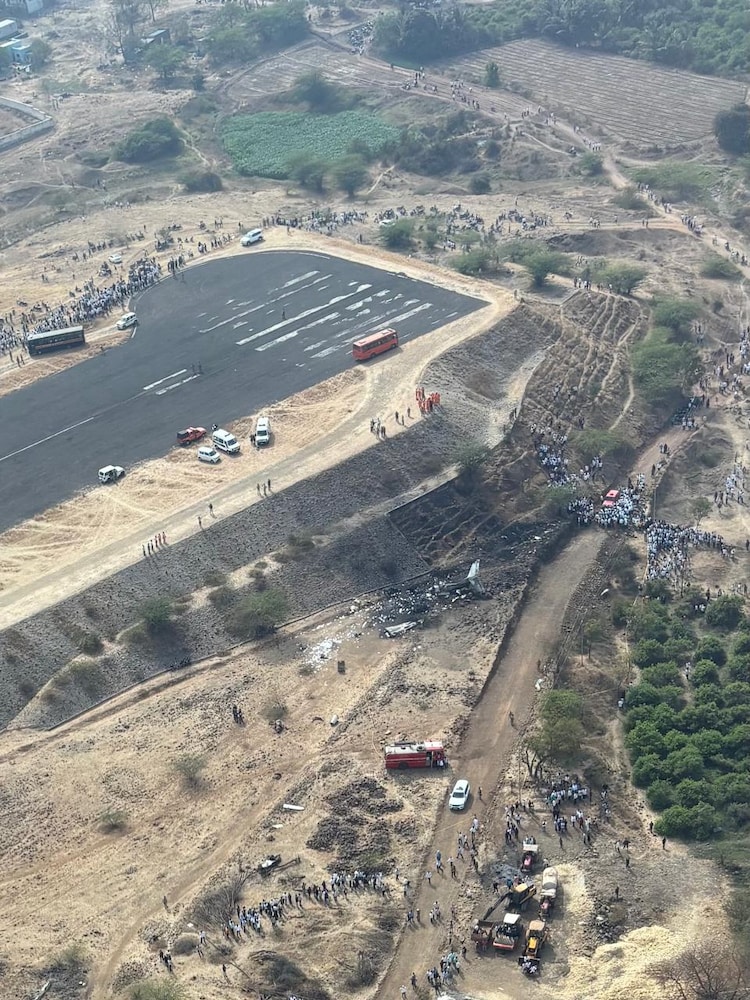
Just minutes after clearance was granted, the Learjet 45 lost control during its second approach to Runway 11. CCTV footage captured the aircraft flipping, veering off course, and slamming into an open field beside the runway threshold.
The aircraft burst into flames on impact and was completely destroyed. Eye-witnesses reported four to five explosions. All five people on board died at the scene.
VT-SSK departs Mumbai CSIA GA Terminal, bound for Baramati.
Aircraft begins first approach to Runway 11. Crew cannot confirm visual contact with runway. Go-around executed.
Crew reports visual contact. ATC grants clearance for second approach.
VT-SSK loses control, crashes into an open field at the Runway 11 threshold, and bursts into flames. All five on board killed.
Who Was on Board? Victims of the VT-SSK Crash
The crash killed all five people on board. Here is a brief profile of each victim.
Ajit Pawar — Maharashtra's Deputy Chief Minister
Ajit Pawar was one of the most influential politicians in Maharashtra. A senior NCP leader, he had served as Deputy Chief Minister multiple times across different governments — the longest-serving deputy CM of the state non-consecutively.
He was travelling to Baramati — his constituency — to address public meetings ahead of the Zilla Parishad elections. His death sent shockwaves through Indian politics and brought the state to a standstill.
The Aircraft — Learjet 45XR (VT-SSK): What You Need to Know
The Learjet 45 is a midsize business jet developed by Bombardier Aerospace of Canada. Launched in 1998, it became popular in the "super-light" business jet segment — fast, efficient, and suited to short domestic charters. VT-SSK was a Learjet 45XR — the extended range variant — and was 16 years old at the time of the crash.
- Manufacturer: Bombardier Aerospace, Canada
- Max cruise speed: 859 km/h (Mach 0.81)
- Seating capacity: Up to 9 passengers
- Typical use in India: VIP charters, medivac, business travel
- Known characteristic: High-performance jet — not forgiving at low speeds during landing
Aviation expert Mark D. Martin noted: the Learjet 45 is not designed to handle well at low speeds, especially during landing. A sharp bank manoeuvre at low altitude can rapidly result in loss of control.
VSR Ventures — The Charter Operator
VSR Ventures is a Mumbai-based Non-Scheduled Operator (NSOP) providing charter and medivac flights across India. Following the crash, the DGCA conducted a special safety audit of the company on 4 February 2026, finding multiple non-compliances. Several VSR aircraft were grounded.
Why Did the Learjet 45 Crash at Baramati? Causes Confirmed by AAIB
The Aircraft Accident Investigation Bureau (AAIB) released a 22-page preliminary report in late February 2026. It identified a cluster of compounding failures — not a single cause.
At the time of the second approach, visibility at Baramati Airport was only 3 km. Visual Flight Rules (VFR) require a minimum of 5 km. The aircraft should never have attempted a visual approach in those conditions.
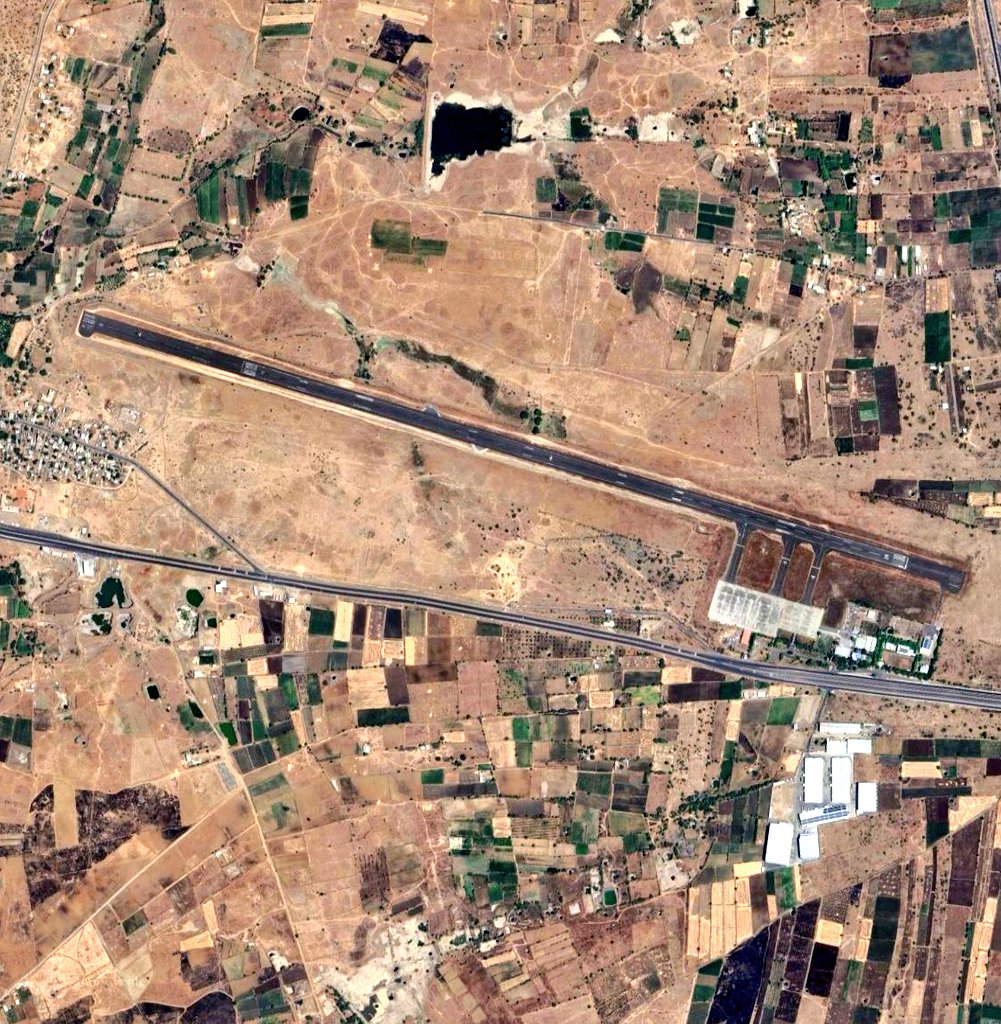
Baramati Airport had no certified Instrument Landing System (ILS) and no IFR infrastructure. Pilots had no electronic guidance to the runway — the entire approach relied on physically seeing it, which was impossible in poor visibility.
The control tower was manned by a temporary ground instructor from a local Flight Training Organisation — not a certified ATC controller. This person lacked the tools and expertise to give accurate weather readings.
Because the airport had no proper meteorological facilities, the weather estimate passed to the crew after their failed first approach was inaccurate. Armed with false data, the pilots believed conditions were safe for a second attempt — a decision that proved fatal.
Investigators also found that runway markings at Baramati had faded significantly and loose gravel was present on the runway surface — worsening landing conditions even if the aircraft had reached the threshold.
Loss of Control During the Second Approach
Aviation experts examining CCTV footage proposed that the crew may have spotted the runway late and attempted a large banking manoeuvre to align — dangerous at low altitude in a high-performance jet. A sharp bank at low speed can cause an aerodynamic stall or asymmetric thrust loss, both unrecoverable at low altitude.
Airport had no instrument approach capability — crew fully dependent on visual contact
Temporary FTO instructor lacked meteorological tools and ATC certification
No METAR station on site — inaccurate visibility reading relayed to pilots
Actual conditions at time of second approach were below legal minimums for a visual approach
Crew spotted runway late, attempted sharp bank — unrecoverable at low altitude
VT-SSK crashes · 08:46 IST · 5 fatalities · 0 survivors
AAIB & DGCA Investigation — Black Box, Audit & FIR (Latest: March 2026)
The investigation into the Baramati Learjet crash is one of the most significant aviation probes in India in recent years, watched closely by safety experts worldwide.
How the AAIB Is Conducting the Investigation
The AAIB is following the Aircraft (Investigation of Accidents and Incidents) Rules, 2017 and ICAO Annex 13 standards. The investigation covers three pillars: physical wreckage examination, flight and maintenance records review, and laboratory testing of aircraft components.
The Black Box — DFDR Downloaded, CVR Under NTSB Review
Both flight recorders on VT-SSK — the Digital Flight Data Recorder (DFDR) and Cockpit Voice Recorder (CVR) — were exposed to intense heat during the crash fire and sustained severe damage.
The DFDR (manufactured by L3-Communications) was successfully downloaded at the AAIB Flight Recorder Laboratory. The CVR (manufactured by Honeywell) is currently under detailed review, with the US National Transportation Safety Board (NTSB) called in for assistance — standard procedure under ICAO Annex 13 when the aircraft is US-manufactured.
DGCA Special Safety Audit of VSR Ventures
On 4 February 2026, the DGCA conducted a special safety audit of VSR Ventures. The audit covered operational control systems, maintenance practices, crew training standards, and flight data monitoring. Multiple non-compliances were found and several VSR aircraft were grounded.
CID Investigation & FIR Filed
Parallel to the aviation safety probe, the Maharashtra Crime Investigation Department (CID) is investigating whether sabotage or criminal negligence played a role. The case was initially registered as an accidental death report by Baramati Taluka Police before being transferred to the CID.
A Zero FIR filed in Bengaluru in late March 2026 alleged a larger criminal conspiracy, citing the last-minute pilot change, VSR's DGCA audit findings, and questions about Captain Kapur's background. Investigators are examining these claims as part of the broader inquiry.
"The AAIB is diligently following all prescribed technical and procedural protocols to ensure a comprehensive, objective and evidence-based investigation." — Ministry of Civil Aviation, India (PIB)
Political Fallout — Three Days of State Mourning in Maharashtra
The death of Ajit Pawar triggered an immediate outpouring of grief across Maharashtra and India.
Chief Minister Fadnavis and PM Modi React
Chief Minister Devendra Fadnavis announced three days of state mourning and described the crash as "an immeasurable loss" for Maharashtra. The national flag was flown at half-mast across the state.
Prime Minister Narendra Modi paid personal tribute to Pawar, recognising his long service to Maharashtra. Senior leaders across party lines — including Supriya Sule, Sharad Pawar, Eknath Shinde, and Amit Shah — rushed to offer condolences.
Family Response
Pawar's wife, Sunetra Pawar, and his sister, Supriya Sule (a sitting MP), immediately made their way to the crash site in Baramati. NCP leader Rohit Pawar raised pointed questions about the preliminary AAIB report, calling it "misleading" and alleging attempts to shield VSR Ventures from accountability.
Aviation Safety Gaps Exposed by the Baramati Crash
The Baramati crash is a case study in what happens when multiple safety systems fail at once. Each gap on its own might have been manageable. Together, they were catastrophic.
The Problem with Uncontrolled Airports in India
Baramati Airport is classified as a non-instrument airport — no ILS, no IFR capability, no certified ATC facility. Dozens of airports across India share this profile. Yet VIP charter flights routinely operate into them under time pressure.
Should VIP Flights Use Airports Without ILS?
The DGCA's regulations for Non-Scheduled Operators require operators to assess weather and airport suitability before every flight. The fact that a flight carrying the Deputy Chief Minister of Maharashtra was cleared into a non-instrumented airport in foggy conditions raises urgent policy questions.
The ICAO recommends that commercial operations at airports lacking instrument approaches should only be attempted under strict meteorological conditions. India's implementation of these standards at smaller aerodromes deserves scrutiny.
What Needs to Change
- Mandatory ILS installation at airports used for NSOP charter operations
- Certified, full-time ATC personnel at all charter-capable airports
- Mandatory on-site meteorological equipment (METAR stations)
- Stricter Go/No-Go weather minimums for VFR approaches by charter operators
- Regular DGCA safety audits of all NSOPs — not just after accidents
Frequently Asked Questions — Baramati Learjet 45 Crash
What caused the Baramati Learjet 45 crash on 28 January 2026?
The AAIB preliminary report points to a combination of factors: visibility at Baramati Airport was only 3 km at the time of landing, far below the 5 km minimum required for Visual Flight Rules (VFR). The airport also lacked an Instrument Landing System (ILS) and had no certified ATC controller on duty, which led to inaccurate weather information being passed to the crew.
Who died in the Baramati plane crash?
All five people on board died: Deputy Chief Minister Ajit Pawar (passenger), Captain Sumit Kapur (pilot), Captain Shambhavi Pathak (co-pilot), Pinky Mali (cabin crew), and Vidip Jadhav (Pawar's Personal Security Officer, a Mumbai Police constable).
Was the Ajit Pawar plane crash an accident or sabotage?
The AAIB's technical investigation points to weather and infrastructure failures. However, the Maharashtra CID is running a parallel criminal investigation. A Zero FIR filed in March 2026 alleges a criminal conspiracy, but no conclusions have been reached pending the final report.
What is the current status of the AAIB investigation into VT-SSK?
As of March 2026, the AAIB has downloaded data from the Digital Flight Data Recorder (DFDR). The Cockpit Voice Recorder (CVR) is under review with support from the US NTSB. The final report is in preparation. A 22-page preliminary report was released in late February 2026.
What is a Learjet 45XR and why is it used in India?
The Learjet 45XR is a midsize business jet made by Bombardier Aerospace of Canada. It seats up to nine passengers, cruises at nearly 860 km/h, and is widely used in India for VIP charters and medical evacuations. It is a high-performance aircraft that requires precise handling at low speeds during landing.
What action has the DGCA taken after the Baramati crash?
The DGCA conducted a special safety audit of VSR Ventures on 4 February 2026. Multiple non-compliances were found and several VSR aircraft were grounded. The DGCA also launched a broader audit of non-scheduled operators across India.
Conclusion — A Preventable Tragedy
The Baramati Learjet 45 crash was not caused by a single, unpredictable failure. It was the product of overlapping, systemic gaps — a non-instrumented airport, an uncertified controller, faulty weather data, and pressure to complete a flight in conditions that should have grounded it.
Five people lost their lives. Maharashtra lost one of its most prominent political figures. And India's aviation industry was forced to confront uncomfortable truths about the safety standards applied to VIP charter operations at smaller airports.
The AAIB's final report will be the definitive account. But the preliminary findings already make one thing clear: the safety barriers that should have stopped this flight in those conditions simply were not in place. That is the real lesson of Baramati.
For more context, read about other major aviation accidents in India and what they changed about how the country regulates air travel.
This article will be updated as the AAIB investigation progresses. No conclusions should be drawn ahead of the final report.
Sources: AAIB Preliminary Report (Feb 2026) · Ministry of Civil Aviation press releases · DGCA official statements · PTI · ANI · The Week · Tribune India · Wikipedia: 2026 Baramati Learjet 45 crash
Fact-check status: All claims cross-verified across a minimum of two independent sources. | Last updated: March 2026